
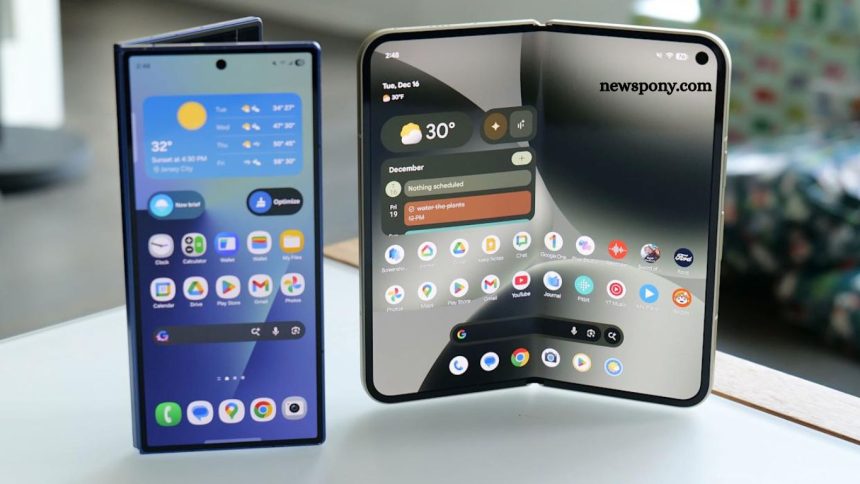
Foldable phones have been evolving for nearly a decade, and the journey has been remarkable. Early models were often bulky, fragile, and prone to glitches, yet they introduced the concept of a device that could transform from a phone into a small tablet. Today, the technology has matured significantly. Manufacturers have addressed almost every paramount problem durability, multitasking, screen quality, and portability—but one critical issue remains: affordability.
The Early Days of Foldables
When the first foldables appeared, they were more proof-of-concept than practical devices. I first encountered one in 2019, a prototype that predated Samsung’s Galaxy Fold. It was cumbersome, with a tiny exterior screen, a hinge that collected debris, and a feel that suggested it might not survive long-term use. Yet, even in its flawed state, it showed enormous promise. It was a true multitasker, capable of functioning as both a phone and a small tablet at a moment’s notice.
Samsung’s original Galaxy Fold was similarly bulky but innovative. Despite its heft and hinge issues, it demonstrated that foldable phones could open new possibilities for productivity and entertainment. The design inspired competitors and set the stage for a new era of smartphones.
Read More: ByteDance to Invest $23 Billion in AI Infrastructure by 2026, FT Reports.
Iterative Improvements Over the Years
Over the following years, foldable technology improved steadily. Samsung introduced water resistance and S Pen support with the Z Fold 3, making it more versatile and practical. The Z Fold 5 refined the hinge design, closing the gap between the two halves of the screen.
Meanwhile, competition pushed the category further. Google, OnePlus, and several Chinese manufacturers, including Oppo and Xiaomi, introduced their own foldables with enhanced designs and more innovative software. Each iteration improved durability, performance, and overall user experience, making foldables more appealing to mainstream buyers.
Major Upgrades in 2025
Two major releases in 2025 pushed foldables to a new level.
Google Pixel 10 Pro Fold – This device achieved IP68 certification for dust and water resistance, a milestone for foldables. With complicated hinges, keeping out dirt and liquids is crucial for long-term usability. While this may not seem like a dramatic improvement for regular phones, for foldables, it represents a significant step forward in durability.
Samsung Galaxy Z Fold 7 – Samsung made perhaps the most impressive leap with the Z Fold 7, matching the size and weight of a traditional smartphone while offering a massive 8-inch interior display. At 7.58 ounces, the Z Fold 7 is even slightly lighter than the S25 Ultra and just as slim. Previous generations often required compromises in bulk, forcing users to carry extra belts or bags to accommodate the device.
Despite these breakthroughs, no foldable currently combines the best features of both devices, though the rapid pace of innovation suggests that may happen soon.
The Crease Is Not a Dealbreaker
Many skeptics focus on the crease in foldable screens, the slight depression where the phone folds. In practice, this is rarely an issue. Most users interact with the edges of the display rather than the center, and the crease is nearly invisible when viewed straight on. Comparing it to a convertible’s retractable roof, minor cosmetic imperfections are expected and rarely affect usability.
The Persistent Problem: Price
The one challenge that remains unsolved is affordability. Foldable phones are expensive, with flagship models like the Z Fold 7 launching at $2,000—more than their predecessors. OnePlus came close with the Open in 2023, offering a $1,500 price after trade-ins, but lower-cost options remain scarce.
High prices have not entirely stopped adoption. Sales of the Galaxy Z Fold 7 are up 50% compared to the previous generation, and global foldable phone sales hit record highs in Q3 of 2025. Demand is strong, indicating that more affordable options could significantly expand the market.
Why Foldables Are Worth It
Foldable phones offer unique advantages over traditional smartphones:
- Multitasking: With larger interior screens, users can run multiple apps simultaneously, increasing productivity.
- Portability: Despite their large screens, recent models are nearly as thin and light as conventional smartphones.
- Durability Improvements: IP68 ratings and stronger hinges make foldables more practical for daily use.
- Innovative Design: The novelty and flexibility of foldables appeal to tech enthusiasts and early adopters.
These benefits make foldables more than just a gimmick; they are devices that can replace multiple gadgets for some users.
The Road Ahead
The foldable phone market is still in its early stages, and prices are gradually decreasing. As competition grows and manufacturing costs fall, we can expect more affordable options in the near future. Future foldables may combine all the current advantages—water resistance, large displays, thin design—into a single, more accessible device.
In addition, ongoing software improvements will enhance the user experience, making multitasking and app integration smoother. The technology is evolving rapidly, and what was once a novelty is quickly becoming a serious choice for mainstream users.
Frequently Asked Questions
What is a foldable phone?
A foldable phone is a smartphone with a flexible screen that folds, transforming from a standard phone into a larger, tablet-like display.
How long have foldable phones been available?
Foldable phones have been around for nearly a decade, with early models appearing around 2019 and Samsung’s Galaxy Fold leading the market.
What are the main advantages of foldable phones?
Foldables offer multitasking capabilities, larger screens, improved portability, and innovative designs, making them ideal for productivity and media consumption.
Are foldable phones durable?
Yes, modern foldables feature stronger hinges, better materials, and IP68 water and dust resistance, though care is still recommended due to the flexible screen.
Do foldable phones have a noticeable crease?
Most foldables have a slight crease at the screen fold, but it is barely visible in everyday use and rarely affects functionality.
Why are foldable phones so expensive?
High manufacturing costs, complex hinge mechanisms, and advanced flexible screens contribute to premium pricing, which remains the main barrier for widespread adoption.
Will foldable phones become more affordable?
Yes, as technology improves and competition grows, prices are expected to decrease, making foldables more accessible to mainstream users.
Conclusion
Foldable phones have come a long way in less than a decade, evolving from fragile prototypes to sleek, feature-packed devices. Manufacturers have addressed nearly every challenge—durability, multitasking, screen quality, and portability—yet affordability remains the final hurdle. Despite high prices, adoption is growing, and sales data show strong demand. With ongoing innovation, increased competition, and potential cost reductions, foldables are poised to become mainstream, offering a unique combination of flexibility, productivity, and convenience that traditional smartphones cannot match.