
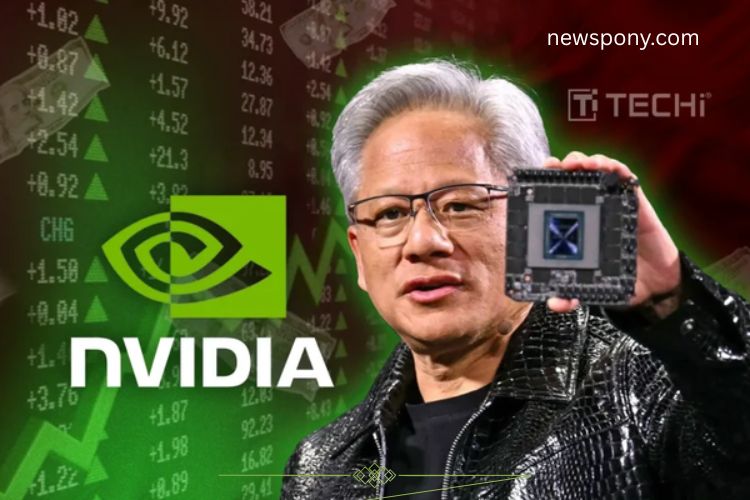
Nvidia, Wall Street’s crown jewel in the AI boom, saw its stock slip slightly despite another solid earnings report. While the chipmaker delivered strong quarterly results, its guidance for the next quarter fell short of lofty investor expectations. This led to a modest 1.1% decline in shares, reminding the market that even the most celebrated companies can stumble occasionally.
On August 29, Nvidia’s stock closed at $179.58, down from its recent peak of $183.98. This pullback signals a softening momentum after a vigorous rally, though the Relative Strength Index (RSI) remains below 70, reflecting healthy yet muted buying pressure.
Read More: Clues: Crack Today’s Exciting Wordle #1696: Essential Hints, Winning Clues & Answer for Feb 9, 2026!
Key Technical Levels and Market Momentum
Investors are closely watching Nvidia’s resistance zone between $182 and $185, tested earlier in the week. A decisive breakout above this range could pave the way for a surge toward $195–$200. On the downside, support sits at $175, with a stronger foundation at $170, which has held consistently throughout the summer.
Despite the minor decline, technical indicators remain largely bullish. The MACD continues its positive alignment, though shrinking histogram bars suggest the rally may need fresh catalysts. Meanwhile, Bollinger Bands are expanding, signaling increasing volatility.
With the stock hovering near the upper band, Nvidia may either be poised for another sharp upward move or approaching a short-term consolidation phase. Traders are monitoring intraday reversals and volume spikes for clues about the stock’s next direction.
Wall Street Boosts Price Targets
Optimism persists among analysts, with at least 10 firms raising their 12-month price targets. The average estimate now sits at $202.60, 12% above pre-earnings levels. JPMorgan’s Harlan Sur lifted his target to $215, citing strong demand for Nvidia’s next-generation Blackwell architecture and a backlog of orders that continues to outpace supply. Truist’s William Stein went further, setting a $228 target based on confidence in long-term AI infrastructure spending.
Nvidia’s Q3 fiscal revenue guidance of $54 billion met consensus but disappointed some bullish investors who had anticipated more than $60 billion. Morgan Stanley analyst Joseph Moore described the guidance as conservative relative to Nvidia’s lofty valuation, while still emphasizing the strength of underlying demand.
Since May, Nvidia has added over $1 trillion in market capitalization, marking a 35% increase since Q1 earnings. This meteoric rise reflects Wall Street’s faith in the company’s AI dominance.
Navigating Risks in China
While the overall outlook remains positive, certain risks persist, particularly related to China—a key but unpredictable market. Although the U.S. has eased some AI chip export restrictions, the impact on Nvidia’s China revenue has yet to materialize significantly.
CEO Jensen Huang noted that Nvidia may adjust Blackwell shipments to accommodate overseas customers, including China, but geopolitical uncertainties make precise forecasts challenging. Analysts emphasize that clarity on China’s role in Nvidia’s expansion will be essential for evaluating growth prospects.
AI Demand Remains the Key Driver
Currently, Nvidia appears to be in a temporary holding pattern, trading between $175 and $185 as the market digests its tempered guidance. Strong institutional buying, evidenced by above-average trading volumes, combined with higher analyst price targets, indicates sustained confidence in the company.
A breakout above $195–$200 remains plausible, particularly if demand for Blackwell-related products accelerates toward the end of the year. Nvidia’s Q2 profit of $1.05 per share on $46.7 billion in revenue exceeded expectations, though a slight shortfall in data center revenue—$41.1 billion versus a predicted $41.3 billion—prompted the initial selling pressure.
Long-Term Growth Story Intact
Despite short-term volatility, Nvidia’s long-term narrative centers on its pivotal role in the AI revolution. Minor setbacks test trader patience but do not undermine the broader trend, which continues to point upward—albeit in a more measured fashion than earlier this year.
The recent 1.1% drop reflects market recalibration rather than weakness. After a significant surge this year, some cooling was inevitable. The key question is whether sustained Blackwell demand and steady AI infrastructure spending will reignite momentum.
If these factors align, the current pullback will be seen as a brief pause before the next leg higher. Conversely, persistent China-related headwinds or renewed valuation concerns could introduce turbulence, even for a company with Nvidia’s growth credentials. Wall Street may remain enamored, but confirmation of continued dominance will be required.
Technical Outlook and Investor Strategies
From a trading perspective, Nvidia’s stock remains attractive for both short-term and long-term investors. Momentum indicators suggest that while the immediate upside may face resistance, the overall trend is positive. Traders are focusing on key breakout levels, intraday volume spikes, and relative strength indicators to time entries and exits.
For long-term holders, the company’s position at the heart of the AI revolution makes it a compelling bet, despite occasional market-induced fluctuations. The combination of strong fundamentals, aggressive analyst price targets, and a backlog of AI-related orders provides a solid foundation for future gains.
Frequently Asked Questions:
Why did Nvidia shares fall despite positive analyst upgrades?
Nvidia’s stock dropped 1.1% because its guidance for the next quarter didn’t meet the high expectations already priced in by investors. While earnings were strong, the market had anticipated even more aggressive revenue growth.
How did Nvidia perform in its latest quarter?
The company reported a robust quarter with revenue exceeding $46 billion and profits of $1.05 per share. However, slightly lower-than-expected data center revenue contributed to the stock’s minor pullback.
What are analysts saying about Nvidia’s stock?
Wall Street remains optimistic. Multiple firms raised their 12-month price targets, with averages now around $202.60. Top analysts cite strong demand for Nvidia’s next-generation Blackwell architecture and AI infrastructure spending as key growth drivers.
What technical levels should investors watch?
Resistance lies between $182 and $185, while support is around $175, with a stronger foundation at $170. A breakout above $195–$200 could signal a renewed upward trend, while a drop below $170 may indicate short-term weakness.
Are there any risks to Nvidia’s growth?
Yes. Geopolitical factors, especially related to China, remain unpredictable. Export restrictions, market access, and local regulations could impact revenue growth from this key region.
How does AI demand affect Nvidia’s stock?
AI adoption is the primary driver of Nvidia’s growth. Increased demand for GPUs and next-gen Blackwell chips could fuel another upward surge, while any slowdown could weigh on momentum.
Should investors be worried about the short-term pullback?
Not necessarily. The 1.1% decline is largely a market recalibration after a strong rally. Nvidia’s long-term growth story remains intact, especially given its leadership in AI technology.
Conclusion
Nvidia’s 1.1% dip highlights the natural ebb and flow of even the most celebrated stocks. While the slight pullback reflects investor recalibration rather than weakness, it underscores the high expectations baked into the company’s price. Strong earnings, robust AI demand, and bullish analyst upgrades signal that Nvidia’s long-term growth story remains compelling. Investors should watch key technical levels, monitor Blackwell architecture demand, and remain mindful of geopolitical risks, particularly in China. For now, the stock appears to be in a temporary pause—a brief moment of consolidation before potentially resuming its upward trajectory. Nvidia’s position at the forefront of the AI revolution gives it resilience, but Wall Street will continue to demand confirmation that its growth momentum remains unstoppable.