
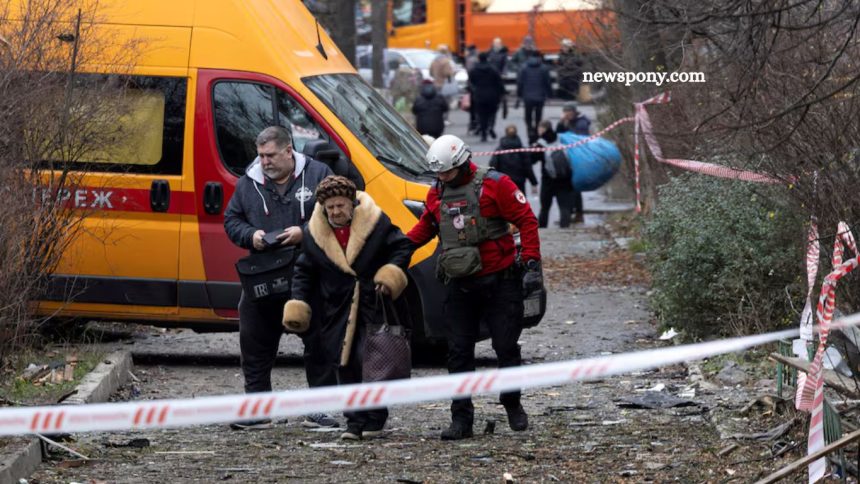
KYIV, Dec 23 (Reuters) – Russian missile and drone strikes killed at least three Ukrainians, including a young child, on Tuesday, sparking extensive emergency power outages across multiple regions and prompting neighboring Poland to scramble jets to protect its airspace.
The attacks, coming just days after another round of U.S.-led peace talks aimed at ending the nearly four-year-long conflict, targeted Ukrainian energy infrastructure in western regions most heavily, Prime Minister Yulia Svyrydenko said.
“These attacks are a direct attempt to destabilize Ukraine and disrupt the lives of civilians,” Svyrydenko added.
Strikes Hit Energy Infrastructure
Ukraine’s national gas company, Naftogaz, confirmed that Russian strikes hit production facilities owned by its extraction subsidiary, Ukrnafta. The attacks caused “serious damage” and forced the shutdown of several facilities, though no casualties were reported. Naftogaz said repair crews were actively restoring operations, but did not specify the exact locations of the strikes.
In the northern Chernihiv region, close to the Russian border, local power distribution companies reported significant damage to facilities, leaving parts of the city without electricity. The outages were part of a larger wave of emergency blackouts affecting multiple regions across the country.
Read More: Domenica Davis: Celebrated Italian-American Meteorologist and Inspiring Broadcast Journalist
International Response
Poland, a NATO member sharing a border with western Ukraine, deployed both Polish and allied aircraft to defend its airspace after strikes targeted areas near the border. The move underscores growing regional concerns over the escalating intensity of Russian attacks.
President Zelenskiy Condemns Attacks
Ukrainian President Volodymyr Zelenskiy said Russia had targeted at least 13 regions ahead of Christmas celebrations, demonstrating that Russian President Vladimir Putin was not serious about ongoing peace negotiations.
“Putin still cannot accept that he must stop killing,” Zelenskiy wrote on X. “And that means the world is not putting enough pressure on Russia. Now is the time to respond.”
Civilian Casualties
Among the fatalities was a four-year-old child in the central Zhytomyr region. Another person was killed in Khmelnytskyi in western Ukraine, and a third outside the capital Kyiv. Local authorities reported at least five additional injuries in Kyiv.
These civilian deaths highlight the ongoing toll of the conflict on non-combatants, even as diplomatic efforts continue.
Russian Claims
Moscow’s Defense Ministry stated that it had targeted Ukrainian energy and military facilities and claimed to have captured two villages along the front line. Kyiv has not confirmed the territorial gains and often disputes Russian claims of advances.
The strikes are part of a broader Russian strategy to increase pressure on Ukraine by targeting energy and logistics networks, aiming to influence Kyiv’s position on a U.S.-backed peace settlement.
Ukrainian Retaliation
Ukraine has continued its own operations against Russian infrastructure. Overnight drone strikes caused a fire at an industrial facility in Russia’s southern Stavropol region, according to regional governor Vladimir Vladimirov. Authorities also reported a fire at the fuel oil supply pipeline at the port of Taman in the Krasnodar region, which has since been extinguished.
Scale of the Attacks
The Ukrainian Air Force reported that Russia launched 635 drones and 38 missiles, most of which were intercepted. Despite this, widespread damage occurred, particularly affecting power networks in western and northern regions.
The energy ministry reported that all regions of Ukraine were experiencing emergency power outages, with nearly all consumers in Rivne, Ternopil, and areas of Khmelnytskyi left without electricity early on Tuesday. In addition to Chernihiv, critical infrastructure in Lviv in the west and Odesa in the south was damaged. Private energy company DTEK confirmed that one of its thermal power plants suffered damage.
Diplomatic Context
The attacks came shortly after weekend peace talks in Miami, which brought together U.S., Ukrainian, and European officials alongside separate contacts with Russian representatives. The discussions explored possible settlement frameworks, but fundamental differences remain.
Russia has demanded that Ukraine cede its eastern Donbas region and significantly curtail its military capabilities before any ceasefire. President Zelenskiy has rejected these terms, insisting that Ukraine will not compromise on sovereignty or territorial integrity.
Ukrainian Military Movements
In a related military development, the Ukrainian military announced that its troops had withdrawn from the embattled town of Siversk. However, Kyiv previously denied Russian claims that Moscow had captured the city. These developments underscore the fluid and contested nature of the frontlines.
Humanitarian Impact
The attacks on energy infrastructure have intensified the humanitarian crisis in Ukraine. Power outages have disrupted heating, water supply, and medical services during the harsh winter months, putting civilians at increased risk. Emergency services are working under strained conditions to restore essential services and assist affected populations.
Regional Security Concerns
Neighboring countries, particularly NATO members, have expressed growing alarm over the escalation. Poland’s deployment of jets to defend its airspace reflects broader concerns about potential spillover from the conflict. Analysts warn that the increasing sophistication and scale of Russian drone and missile operations could pose significant security challenges across Eastern Europe.
Analysis
Experts say the attacks reflect a broader Russian strategy to pressure Ukraine into concessions. By targeting civilian energy infrastructure and logistics, Moscow aims to create economic and social disruption while demonstrating military leverage. Ukraine’s retaliatory strikes on Russian infrastructure, meanwhile, indicate Kyiv’s determination to contest Russian advances and maintain a negotiating position.
“The pattern of strikes shows that Russia is not seeking peace at the moment, but attempting to force Ukraine to the table under duress,” said a European security analyst. “Ukraine’s resilience and NATO support will be critical in countering these tactics.”
Civilian Resilience
Despite the attacks, Ukrainians continue to prepare for Christmas, highlighting the resilience of civilians amid the ongoing conflict. Communities are organizing local support networks, while authorities work tirelessly to restore electricity and maintain essential services.
President Zelenskiy has called on the international community to increase pressure on Russia, stressing that the attacks are a reminder that tangible consequences must back diplomatic efforts for Moscow’s actions.
Frequently Asked Questions
How many people were killed in the latest Russian attacks?
At least three Ukrainians were killed, including a four-year-old child. Additional injuries were reported, particularly around Kyiv.
Which regions of Ukraine were most affected?
Western regions, including Rivne, Ternopil, Khmelnytskyi, and Lviv, experienced the heaviest damage to energy infrastructure. Northern Chernihiv and southern Odesa also reported outages and damage to facilities.
What kind of infrastructure was targeted?
Russian strikes focused primarily on energy facilities, including gas production sites and thermal power plants, as well as key logistical and industrial infrastructure.
How did Ukraine respond to the attacks?
Ukraine’s air force intercepted most of the incoming drones and missiles. Additionally, Ukrainian forces conducted retaliatory strikes on Russian facilities in Stavropol and Krasnodar regions.
What was Poland’s response to the strikes?
Poland, a NATO member, deployed jets and allied aircraft to protect its airspace after strikes near the border raised security concerns.
How do these attacks affect peace negotiations?
The attacks occurred just days after U.S.-led peace talks. Ukrainian President Zelenskiy described them as evidence that Russia is not serious about diplomacy, while Russia continues to demand territorial concessions and military restrictions from Ukraine.
What is the humanitarian impact of the attacks?
Widespread power outages disrupted heating, water, and other essential services, worsening the humanitarian situation as winter approaches. Local authorities and emergency crews are working to restore electricity and critical infrastructure.
Conclusion
Tuesday’s Russian missile and drone attacks underscore the escalating intensity of the nearly four-year conflict in Ukraine. Targeting energy and critical infrastructure, the strikes left civilians dead, caused widespread power outages, and heightened regional security concerns, particularly in NATO-bordering countries like Poland.